
the history of cloisonné enamel
Cloisonné Georgian enamel developed in the 8th century. With its very colorful and transparent design, accompanied by the sense of beauty and the Georgian spirit. Enamel is glass fused to a metal surface. Most often, the glass is a blend of silica (or sand), soda, lime, and borax. This mix creates a clear, colorless enamel called flux. It can be transparent, opaque or opalescent (translucent), and an enormous range of colors can be made by adding metal oxides to the flux. Around the 15th century, enamel technology stopped its evolution and was forgotten for a long time. Since the 1990s, after a long pause, enamel art has started to flourish again. Today many craftsmen work in this field.
Hundreds of years have passed since the first enamel jewelry was made. During this time, designers created enamel jewelry inspired by previous enamellers. However, in their enamel artistry, they not only used past experience but also incorporated their own innovations and ideas. Each period has greatly shaped enamel craftsmanship. It’s interesting to learn about the history of enamel jewelry and different trends that characterized each period.
Egypt (4000-345 BC)
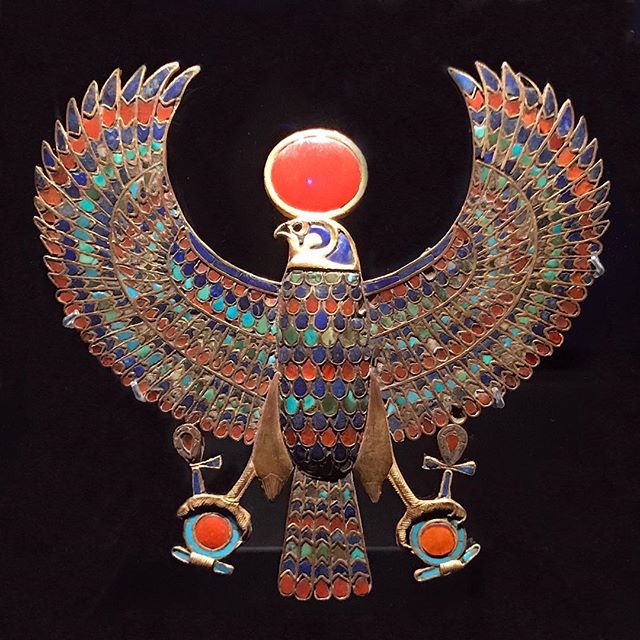
Ancient Egypt is considered to be the birthplace of enamel. Egyptians believed that enamel jewelry created a powerful visual experience, and despite the social class structure of Egypt, everyone wore them. Craftsmen used different kinds of metals such as gold, silver and copper and then coated them with enamel.
Pictured: Breastplate featuring a falcon in gold, lapis lazuli, carnelian, and enamel glass. From the Jewels of Tutankhamun.
Byzantium (395-1453 AD)
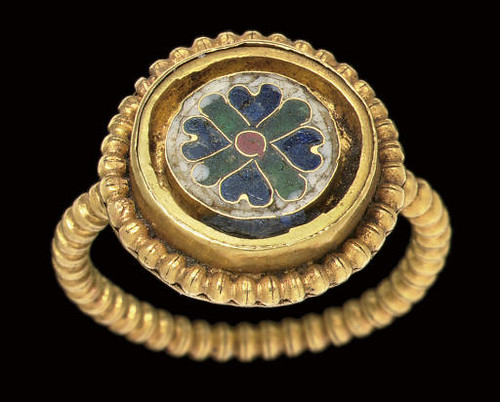
Thanks to the knowledge and experience from ancient Egypt, enamel technology has improved greatly and reached its height in the 4th century during the Byzantine time, when blue coating was primarily used. During this period enamel jewelry became more beautiful and popular even in Europe. Subsequently, copper enamel jewelry replaced gold, hence reducing manufacturing costs.
Pictured: A Byzantine gold and enamel finger ring, circa 10th century A.D.
The Renaissance (14th-16th centuries)
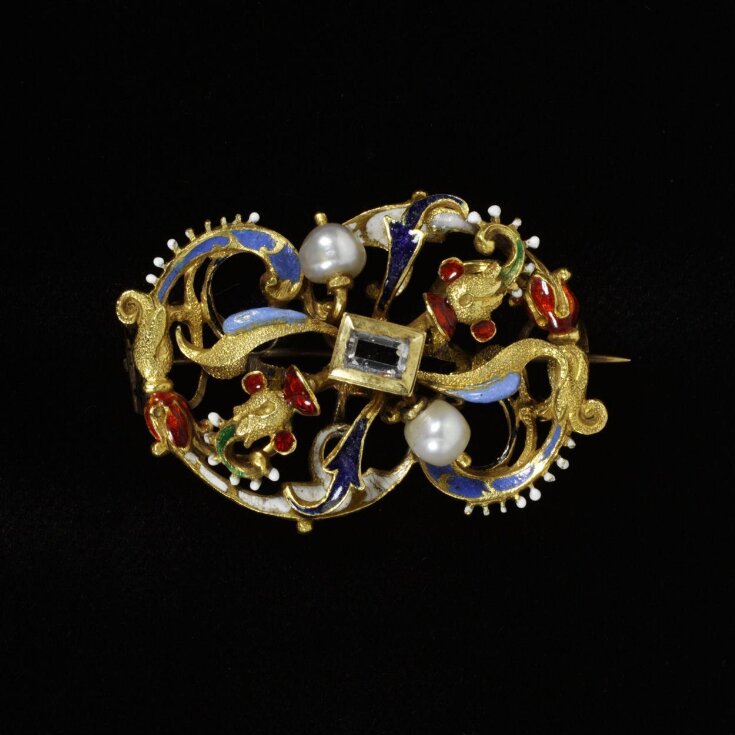
The Renaissance period focused on cultural secularism, and everything became human-centered (anthropocentrism). This new thinking was widely manifested in art, literature etc. The change also affected enamel design. It was a start of a new era in enamel art. Craftsmen gained much more freedom with their innovations and ideas and produced new types of forms, patterns and themes.
Pictured: Dress ornament, gold, enamel, set with a table-cut diamond and two pearls, the brooch fitting added later. South Germany, ca.1610-20.
 Ikorta Studio